Electricity for useful work
Reducing losses helps put more of the power entering a facility toward the computing it was built to deliver.
RETHINKING THE ENERGY BEHIND COMPUTING
A different kind of data center.
A bigger vision for the world.
The world needs more computing. Ritheum is rethinking the power behind it. Our data center technology is designed to use less electricity at the source, opening the door to less heat, less cooling and more room for what comes next.
Ritheum Systems brings power architecture, compatible computing and building design together as one data center systems solution.
Our ambition is simple: make the computing the world depends on use less power.

AI, scientific discovery, business and everyday digital services all rely on data centers. Power savings can change what it takes to support them.
Reducing losses helps put more of the power entering a facility toward the computing it was built to deliver.
Less wasted power means less heat to remove, creating opportunities to reduce cooling equipment, water use and maintenance.
More efficient systems could help expand digital capacity where power and suitable buildings are limited.
Our ambition is global.
The change starts with how we use power.

Electricity changes form on its journey to a computer. Each conversion can lose energy as heat. Ritheum’s approach simplifies that journey.
The Coolverter brings AC-to-DC conversion and battery backup to the rack. A shared 48-volt DC supply powers compatible servers and other equipment, reducing the need for repeated conversion stages.
This describes the external power architecture. Devices still regulate voltage internally; complete-system efficiency depends on the equipment and workload.
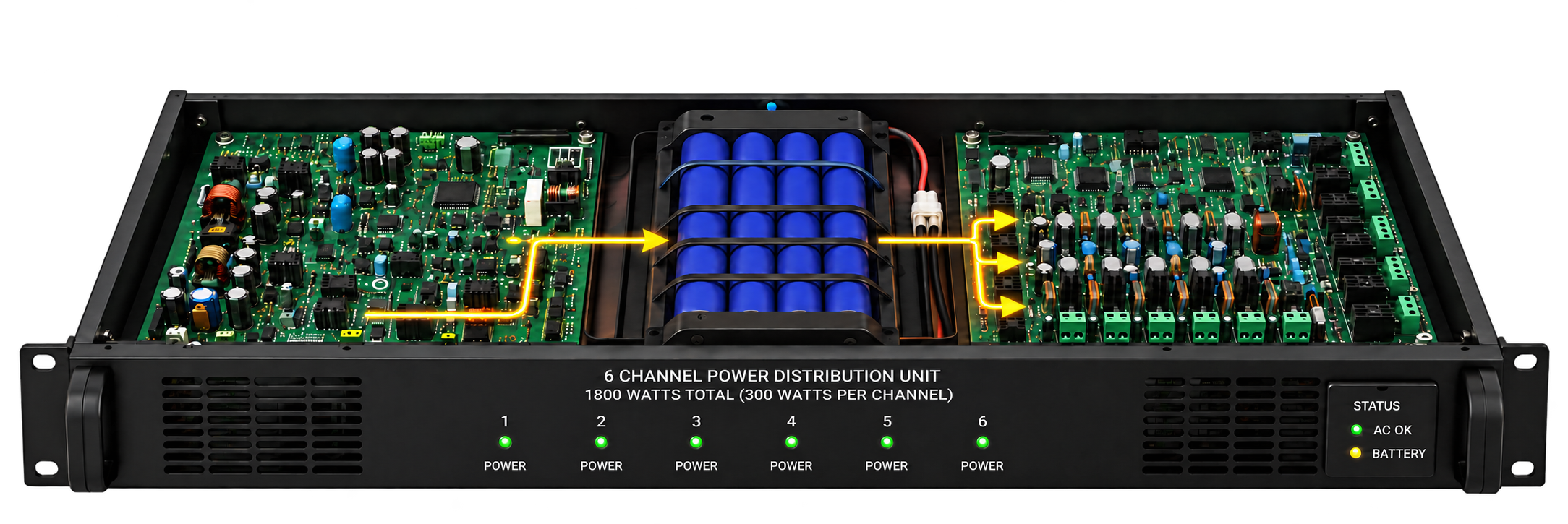
Power Distribution Unit (PDU)
The power unit at the center of the Ritheum architecture. Its design combines conversion, six channels of 48-volt distribution and battery backup at rack level.
Bringing those functions together creates a new way to organize power delivery across compatible equipment.
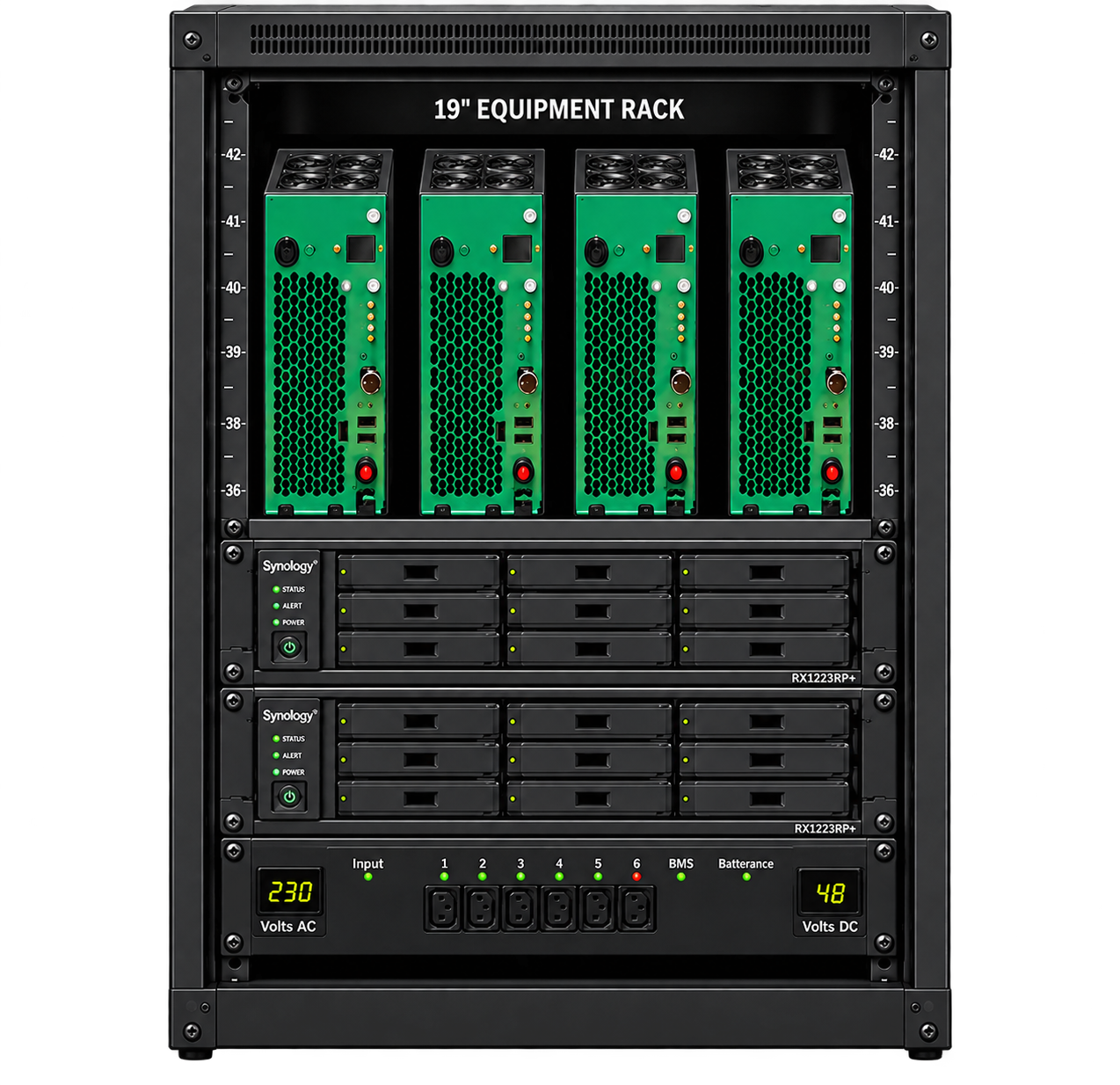
Each set brings together four vertical DSi servers, two storage units and one Coolverter Power Distribution Unit. Air gaps separate the servers in the open rack.
The larger idea is a complete data center system: hardware, controls and the environment around them working toward the same power-saving goal.
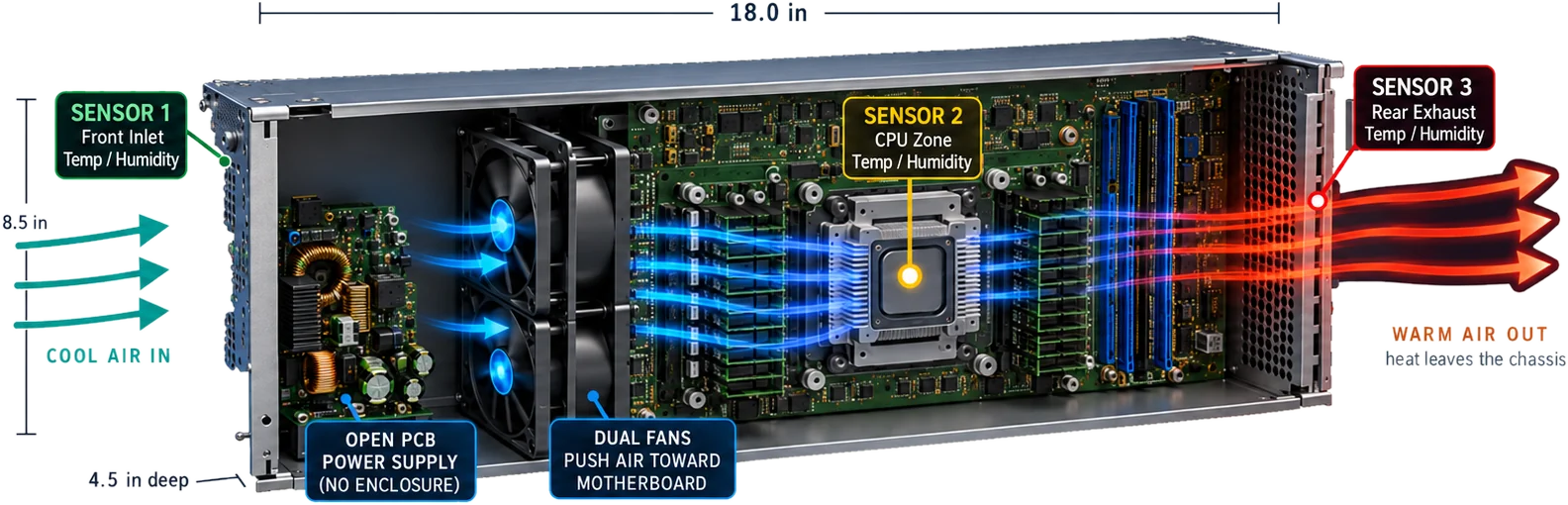
Ritheum’s technology story includes company-provided hardware designs and test results, plus a cited third-party thermal report. The next step is proving performance across complete racks and operating facilities.
Company material reports these full-load readings at 55 °C for a DSi server and a reference system. Interpreting the difference requires equivalent workloads, throughput and configurations. These readings are not a facility-wide savings guarantee.
Company material cites TÜV Rheinland report IN25KSJW 001 for server operation at this ambient temperature. The full report and its test conditions must be reviewed before extending that result to other equipment, racks or facilities.
The power readings are company-reported. The cited thermal report must be read with its configuration and test conditions. Server results do not establish whole-rack or facility performance. Ritheum’s continued testing focuses on useful computing output, energy consumption, reliability and real operating conditions.
When less electricity is wasted, less heat needs to be removed. That can change the role of HVAC, chillers and cooling towers in a data center.
Ritheum combines efficient power delivery with the exploration of higher-temperature operation. Together, they open the possibility of less mechanical cooling and lower demand for cooling water.
Where cooling systems can be reduced, so can the pumps, pipework and specialist maintenance that support them.
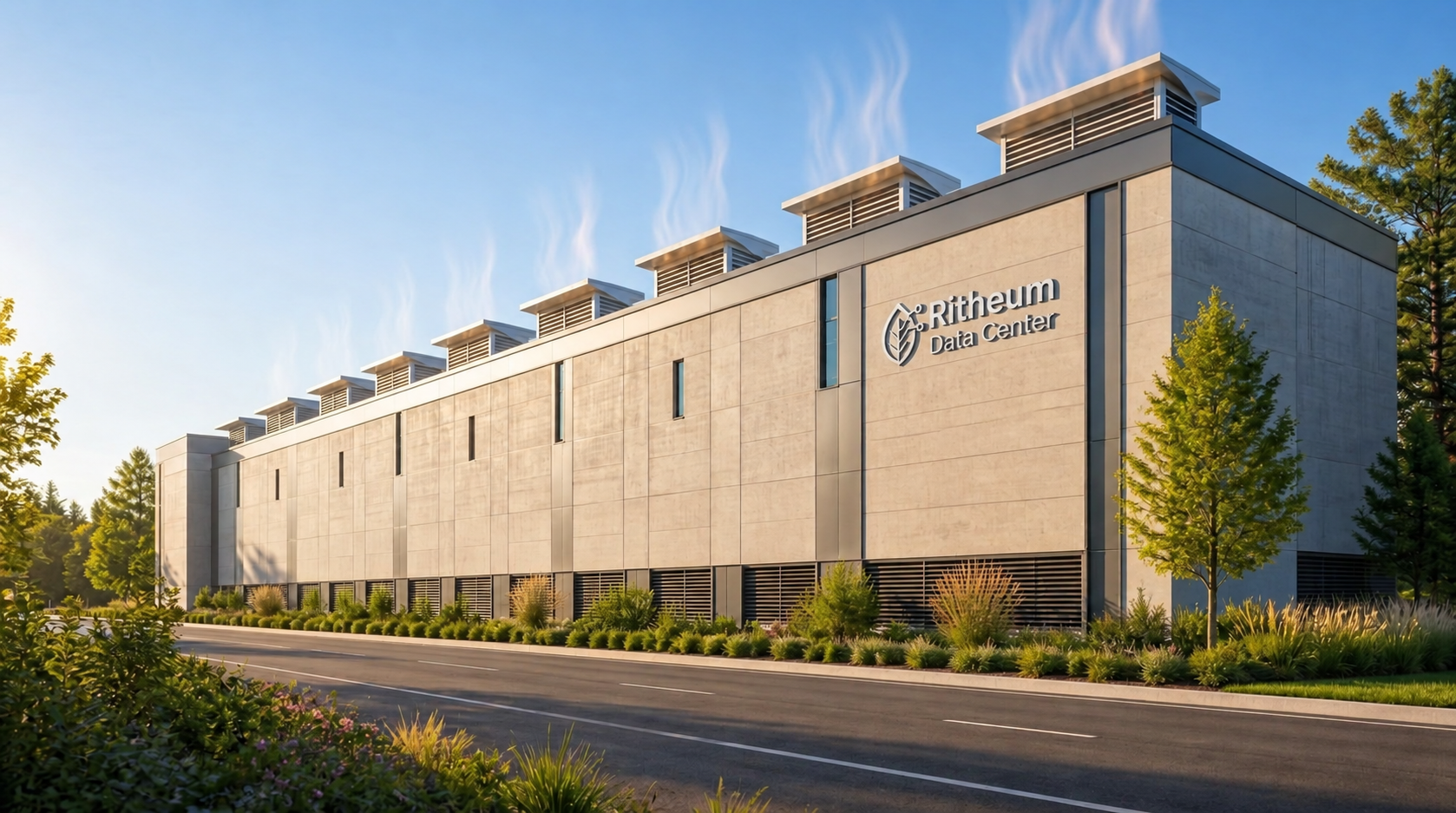
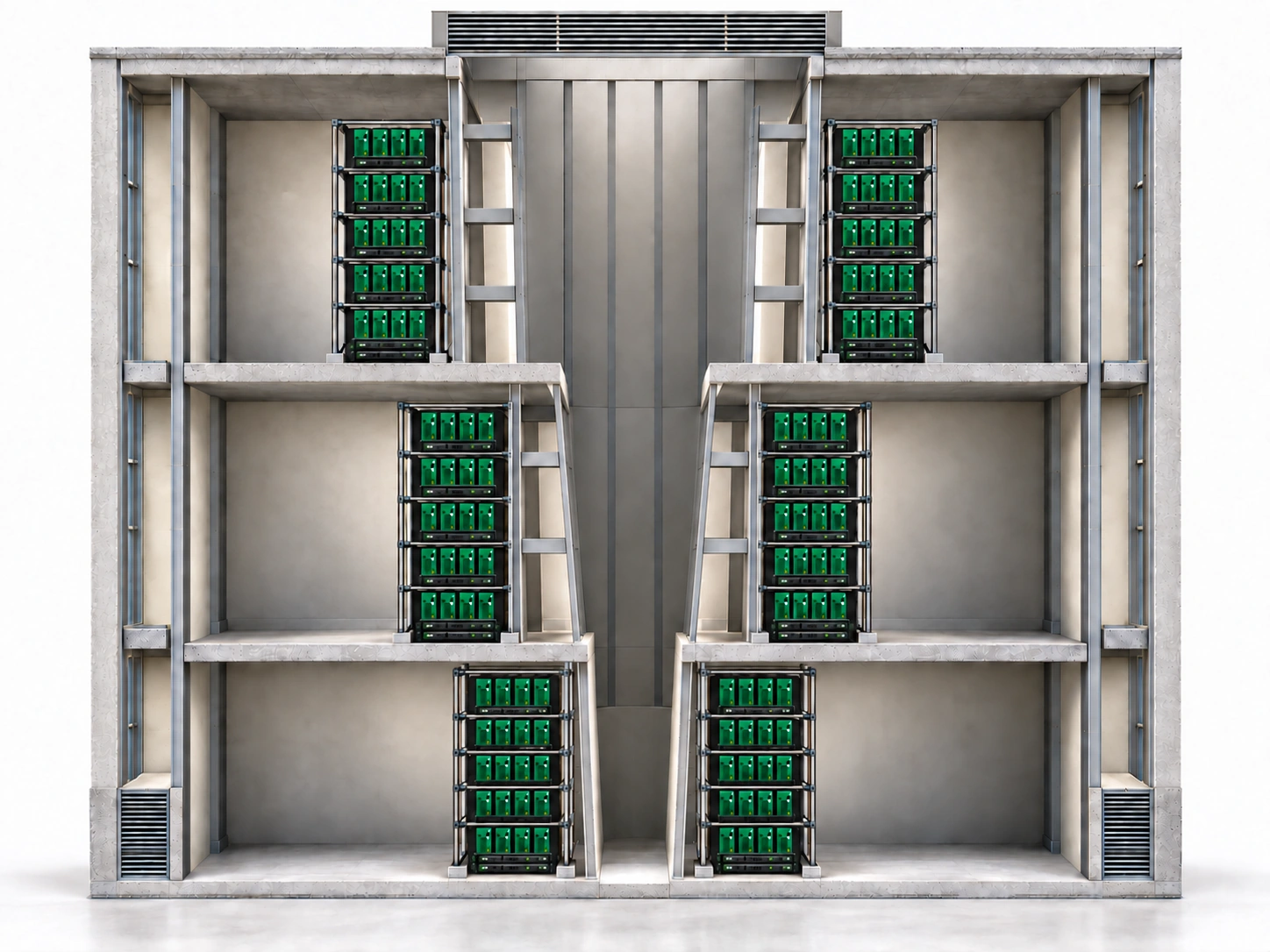
The naturally aspirated concept uses engineered airflow to carry heat out of a shared server hall. The building becomes part of the thermal design.
Every data center still needs to remove heat. The achievable cooling reduction depends on climate, airflow and the limits of all installed equipment.
Suitable offices and warehouses could find a new purpose as data centers. Ritheum is exploring how efficient power systems and coordinated building airflow could make that transformation possible.
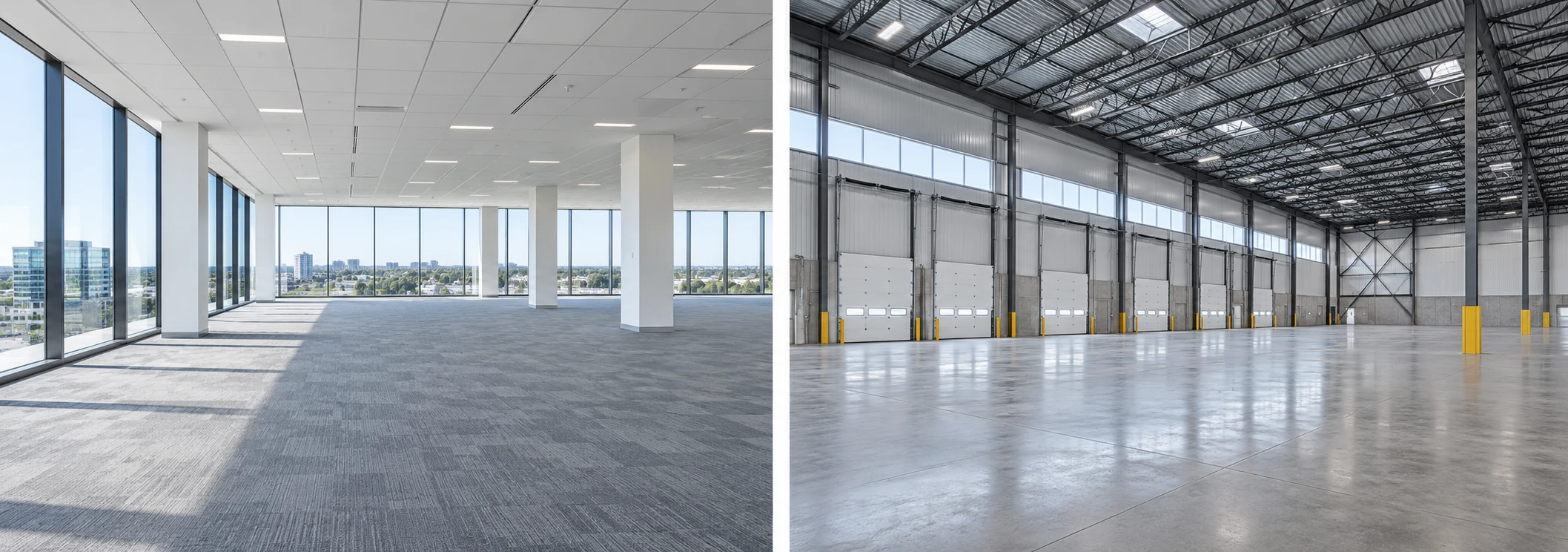
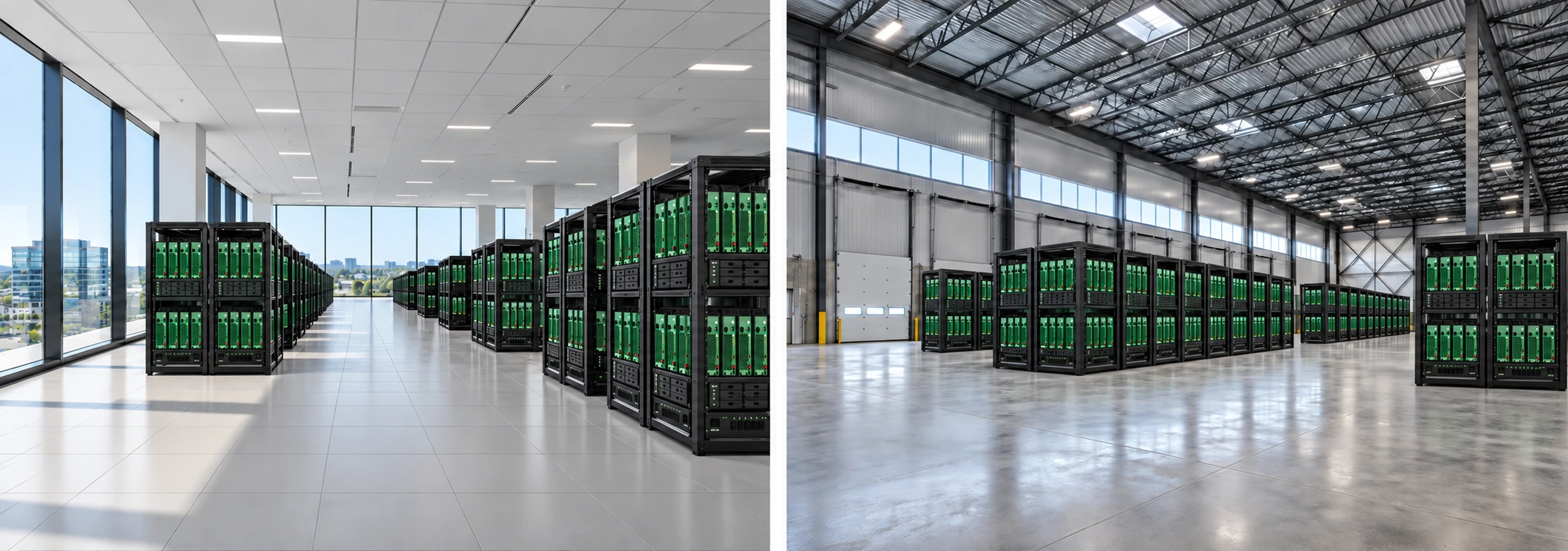
Illustrative conversions using Ritheum-style racks. These are not completed projects or engineered layouts. Suitability depends on available power, connectivity, structure, airflow and approvals.
Ritheum is exploring how its power-saving approach can support the next generation of AI computing, across CPU-based systems and future accelerator configurations.
The research includes efficient CPU-based approaches to selected AI workloads, new hardware directions and continued development of the DSi platform.
Some data centers use CPU-only systems; AI facilities may combine CPUs and accelerators. The right architecture depends on the workload.

The focus is useful work: what a system can accomplish for the electricity it consumes. Future AI performance and efficiency will be established through workload-specific testing.
Future AI systems may retain a power-saving benefit without retaining the same high-temperature capability. Continued research will determine both.
AI capabilities and energy-saving goals described here are research directions, not established GPU performance results.

1946–2026
Inventor. Engineer. Founder of Davis Systems.
Ritheum’s technology began with Arch Davis’s engineering vision: a different way to power computing.
Arch developed the 48-volt server architecture at the foundation of Ritheum’s systems approach. His work brought efficient power delivery and higher-temperature computing into a shared design.
We honor the inventor behind the technology and the years of work that made this path possible.
Remembering Arch DavisLeadership and capital formation.
Interested in the technology, a potential site, or working with Ritheum? We’d like to hear from you.
info@ritheum.comConnect with our team to learn more about the power architecture, the building vision and our work toward more efficient computing.
Request a briefing ↗